Jose Gonzalez Granero

Jose Gonzalez Granero, Clarinetist and composer based in the San Francisco Bay Area, recently 1st Prize Winner for the Villiers Quartet New Works Composition Competition (London), also he has been nominated twice for the Hollywood Music in Media Awards. Mr. Gonzalez Granero holds the Principal Clarinet position for the San Francisco Opera Orchestra since 2010. He graduated from Granada Royal Conservatory, USC Thorton School of Music and The Colburn School in Los Angeles under his mentor Yehuda Gilad.
Mr. Gonzalez has won numerous competitions and awards, both as a clarinetist and composer, including Grand Prize for exceptional talent and musicianship in the Pasadena Instrumental Competition (2009), First Prize in the Burbank Philharmonic Concerto Competition (2009), Second Place in the Downey Symphony Orchestra Concerto Competition (2009), Second Prize in the Pasadena Instrumental Competition (2008), Second Prize ‘Ville de Comines-Warneton’ composition competition and winner of the Villiers Quartet New Works Composition Competition (London, UK). His pieces has been published by Scomegna Edizioni Musicali ( Italy ) and Rivera Musica ( Spain ).
Mr. Gonzalez was Principal Clarinet of the Andalucia Philharmonic Orchestra (Spain) from 2005-2007. He has also performed as Principal Clarinet with the Norwegian Radio Orchestra (Norway), Odense Symfoniorkester (Denmark), Young Musician Foundation Debut Orchestra ( USA ), Galicia Symphony Orchestra (Spain), City of Granada Orchestra (Spain), Orchestre des Jeunes de la Mediterranee (France), the European Union Youth Wind Orchestra (Luxemburg), toured as a soloist with UC Davis Symphony Orchestra performing Mozart Clarinet Concerto through Spain and sub with the San Francisco Symphony. In addition, he is an active chamber music player, he has performed with Susan Graham, Music@Menlo, Oregon Bach Festival, Music in the Vineyard, Music in May and EnsembleSF.
Currently, Mr. Gonzalez Granero alternates his career as a clarinetist with the San Francisco Opera Orchestra and as a composer, premiering pieces with EnsembleSF, Music in May, EOS Ensemble, Granada Brass Quintet, Proemium Metals and Stanford Philharmonia.
Notes for String Quartet No. 2
“In Times of Confinement“
String Quartet no.2 “ In times of Confinement” was written during the pandemic and during the lockdown. It was commissioned by violinist Julie Kim. This piece was a finalist and got a honorary mention in the Bartók World Composition Competition in Hungary being one of the 6 finalists among 349 competitions.
This string quartet combines elements from Spanish culture such as a “Zapateado”, a Spanish dance in 6/8. The beginning of the piece “ Prayer” was dedicated to the victims of the COVID-19.
Shabnam J. Kermani
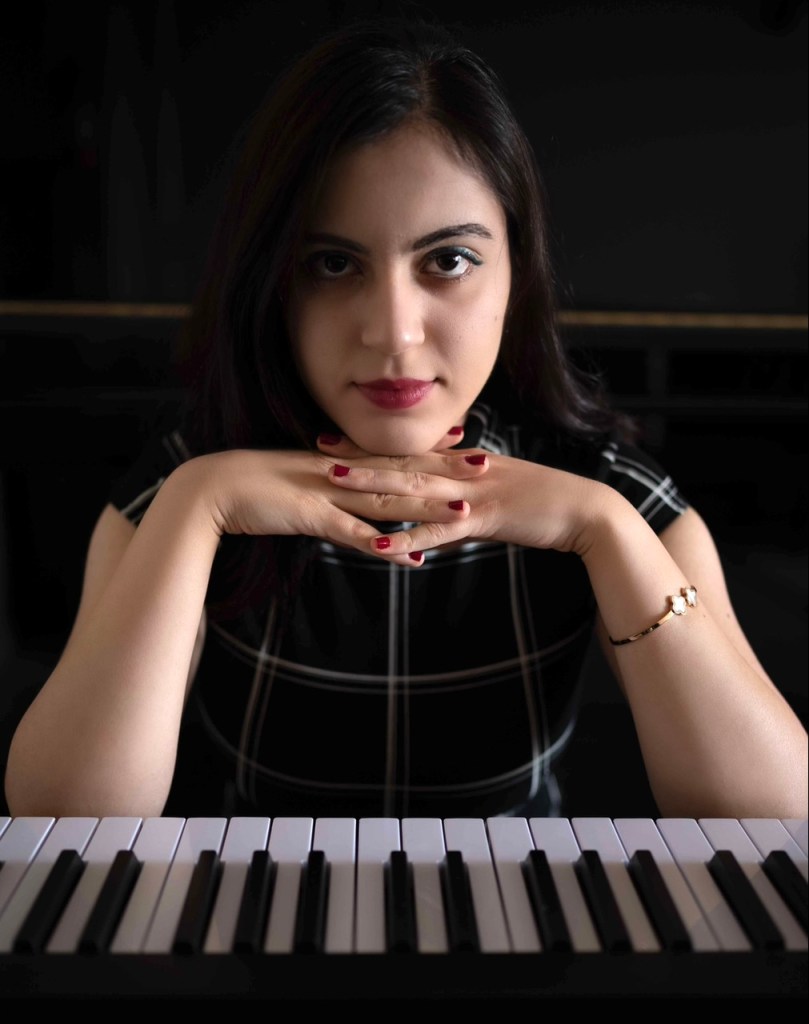
Shabnam is a senior Berklee College of Music student majoring in Film Scoring and minoring in Conducting. She transferred to Berklee in 2019 after two years at the San Francisco State University where she double-majored in Cinema and Classics, and minored in Music. She has studied Classical Piano for 14 years and with distinguished professors in the U.S., and in her home country, Iran. She has always been fascinated by the power of music as a storyteller, and she fell in love with composition and film scoring after moving to the U.S. in 2014. She often draws upon her Iranian heritage and her studies in the field of archaeology and classical literature in her music.
Notes for The Day Of
The Day Of chronicles a summary of the historical and tragic events that befell the ancient Roman city of Pompeii in 79 A.D. In that year, the eruption of the volcanic Mount Vesuvius altered the lives of the people local to that region, as the cities close to Vesuvius were destroyed, and with it, miraculously, preserved by the scorching volcanic pumice and ash. The piece follows a format of flashbacks and movements in time as the times before and after the eruption are expressed in the music. Clashes of dissonance and consonance are frequent. Never mind the archaeological evidence and treasure that this event left for the future generations, this piece mainly focuses on the chaos, disorientation, and fear that followed this event, and mourns the loss of life and beauty. The piece begins with the sound of breeze and wind, simulated on the strings. This wind caresses the deserted land after the eruption, as a melody, which I call the “Melody of Pompeii” is dimly heard on the violin. Following that melody, we are presented with a flashback of what Pompeii was prior to the eruption; the sound of bells, movement of people and lives. This is of course, short-lived as a variation on the melody warns us of an incoming doom. As the quartet rises in dynamics, so do the smokes from the mountain, when finally, we reach the eruption. Confusion, fear, and escape are all presented in the moments after the eruption, until we are back to the deserted city and the sound of the wind. A mournful cello recalls the Melody of Pompeii, and with it, the glory and beauty that the city was. Eventually, we are taken back to the time of the eruption, and the chaos and destruction it brought through the disoriented sound of the ensemble. The ensemble leaves us with the sound of the lonely and mournful wind, as the piece ends on the same number of when the events concluded, measure 79.
Theo Haber

Theodore Haber (b. 1999) is a San Francisco Bay Area based composer and violinist. He is a recent graduate of the USC Thornton School of Music where he studied composition. He also enjoys baking and making pottery.
Notes for Distance
This piece is about distance. Distance we travel, distance between those close to us, and distance we can shrink between those that we are just meeting. Having only recently been able to connect and interact with people again after almost a year in isolation, it feels wrong to immediately pack up and leave. But, this is what I am doing. I am moving from the city where I spent the last four years of my life. I am leaving my close knit community of friends and collaborators. I am going somewhere to meet all new people. I am excited, and scared. What has been constantly on my mind as my time here wraps up, has been distance.
Emily Onderdonk
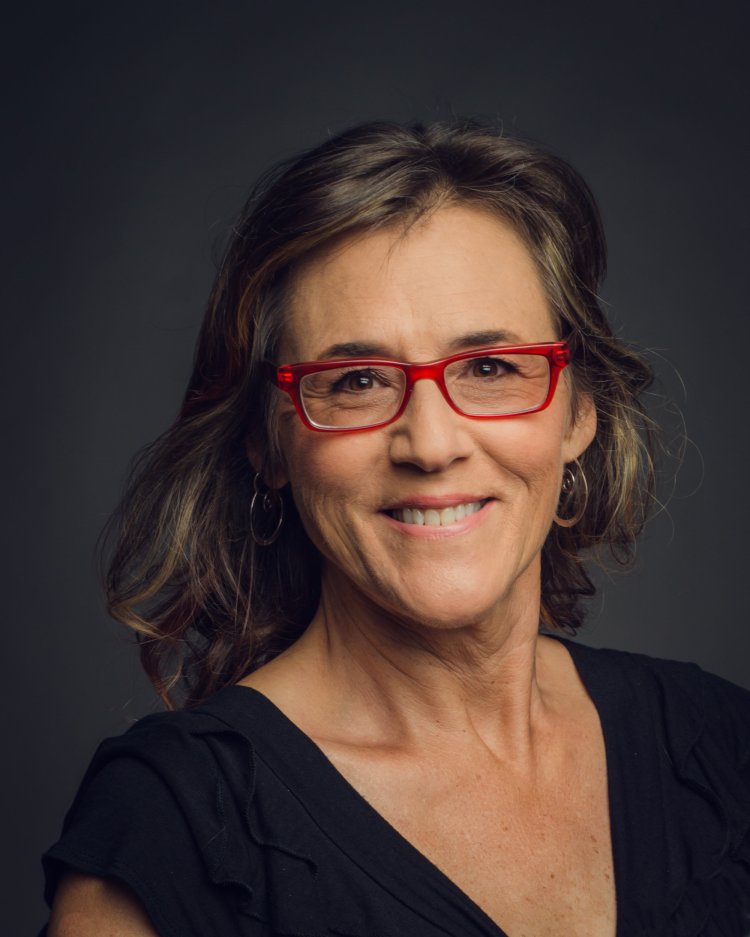
Emily began her career as a violist while getting her Bachelor’s and Master’s degrees at the Manhattan School of Music. Her first major gig was a New York City Opera tour around the country, one of eight tours she performed in altogether. Orchestral highlights include stints with the New York Philharmonic, San Francisco Symphony, Opéra National de Lyon, New Century Chamber Orchestra, San Francisco Opera and Ballet orchestras. Especially memorable was a trip to Brazil with the Women’s Philharmonic, performing on the Copacabana Beach to a crowd of 80,000 people.
A founding member of Quartet San Francisco, Emily was nominated for classical- crossover GRAMMY® awards in 2007 and 2008 for the quartet’s jazz and Latin CD’s, “Latigo” and “Whirled Chamber Music”. The quartet also performed at the famous Café Tortoni in Buenos Aires, after winning the Grand Prize at the 1st International Tango Competition in NYC. Since then, Emily has led jazz and tango workshops at the Manhattan School of Music and at fiddle and jazz camps led by Alasdair Fraser and Christian Howes. She has performed with the Real Vocal String Quartet, Lesa Terry, John Santos, and her playing can be heard on numerous jazz and pop albums. Emily also has several Broadway shows under her belt from The Scarlett Pimpernel, Phantom of the Opera, Fiddler on the Roof, to Les Miserables,Wicked, and most recently, Hamilton. A diverse career has given Emily opportunities to work with many extraordinary artists, including Luciano Pavarotti, Placido Domingo, Dawn Upshaw, Anne Sophie von Otter, Joshua Bell, Leon Fleisher, Nadja Solerno-Sonnenberg, Simone Dinnerstein, Daniel Hope, Mark O’Connor, Clarice Assad, Billy Childs, Hubert Laws, McCoy Tyner, Bob James, Diana Krall, Tower of Power, Santana, Peter Gabriel, Josh Groban, Johnny Mathis, Smokey Robinson, and Rupa and the Fishes. In addition to writing for and performing with Vitamin Em, Emily is principal violist with the Sacramento Philharmonic and the San Jose Chamber Orchestra, performs often with the San Francisco Ballet and New Century Chamber Orchestra, is on the faculty at California State University East Bay and records pop, movie, and video game soundtracks at Skywalker Ranch.
Notes on The Phoenix
The Phoenix, (original title “Fonix”), is a fiddle tune I learned at one of the Alasdair Fraser fiddle camps I attended in the early 2000’s. It’s a wonderful tune written by the Norwegian duo Annbjørg Lien (hardanger fiddle) and Bjørn Ole Rasch (keyboards) and released on their 1996 album Prisme. Fonix is a very popular tune with fiddlers around the world, and several renditions of the tune have been recorded by various artists. This version was written in 2015 for Vitamin Em’s album Shake It Up and it differs from the original in some important ways. It includes an equal dose of my own music and takes advantage of string techniques (e.g. chopping, pizzicato) and the rich sonorities produced by the string quartet. Classical music lovers may hear a variation of Mendelssohn’s Hebrides Overture theme in the lyrical middle section.
 Summer @ The Hidden Cafe